How to Choose the Best Luxury Hair Extension Salon in London for Your Hair Type
10 min read
Contents:
- The Problem: Why “Best Salon” Isn’t a Universal Answer
- Why Getting This Choice Right Matters So Much
- Step-by-Step: How to Choose the Right Salon for Your Hair Type
- Step 1: Identify Your Hair Type Honestly
- Step 2: Look for Salons That Specialise Rather Than Generalise
- Step 3: Check How the Consultation Is Structured
- Step 4: Ask About Hair Sourcing and Grading
- Step 5: Compare Transparent, Itemised Pricing
- Step 6: Read Reviews With a Critical Eye, Focused on Your Hair Type
- Step 7: Book a Consultation Before Committing to a Fitting Date
- Worked Examples: Matching Salon to Hair Type
- Example One: Fine, Previously Coloured Hair
- Example Two: Thick, Virgin Hair Wanting Dramatic Length
- Example Three: Naturally Curly Hair
- Example Four: A Busy Professional Wanting Low-Maintenance Length
- What “Luxury” Should Actually Buy You
- Common Mistakes to Avoid
- Troubleshooting: What to Do If You’ve Already Chosen Wrong
- If Your Extensions Feel Uncomfortable or Look Uneven
- If You Suspect the Hair Grade Was Misrepresented
- If the Method Genuinely Doesn’t Suit Your Hair
- If You’re Not Sure Whether to Switch Salons Entirely
- Frequently Asked Questions
- How much does a luxury hair extension salon cost in London?
- What questions should I ask before booking?
- Is a more expensive salon always better for my hair type?
- How do I know if a salon actually specialises in my hair type?
- What if I’m not sure what method suits my hair?
Here’s something most first-time buyers don’t expect: research from within the hair industry suggests that a substantial share of extension clients who report being unhappy with their result were never actually mismatched on hair colour or quality — they were mismatched on method, fitted with a technique that simply didn’t suit their hair type in the first place. Getting this right isn’t about luck. It’s about knowing exactly what to look for before you book, and the good news is that it’s entirely learnable in the next few minutes.
Choosing the right luxury hair extension salon in London for your specific hair type is genuinely one of those decisions where a bit of upfront homework pays off enormously. Get it right, and you get months of natural-looking, comfortable extensions. Get it wrong, and you’re looking at an early correction appointment, wasted money, and possibly some avoidable strain on your natural hair.
The Problem: Why “Best Salon” Isn’t a Universal Answer
The most common mistake in this whole process is searching for the single “best” salon as though it’s a fixed ranking that applies to everyone equally. It isn’t. The best salon for someone with fine, previously bleached hair is not necessarily the best salon for someone with thick, coarse, virgin hair wanting dramatic length. Luxury, in this context, doesn’t just mean expensive — it means a level of expertise and customisation that genuinely adapts to the individual sitting in the chair.
Search results and social media only make this harder, since the most visible salons are often the ones with the biggest marketing budgets rather than the deepest technical expertise for any specific hair type. A stunning transformation photo tells you almost nothing about how that same salon would handle your own density, texture or colour history — and yet it’s usually the first, and sometimes only, factor buyers use to make a decision.
Why Getting This Choice Right Matters So Much
Extensions sit against your scalp for months at a time, interacting with your natural hair every single day — through washing, brushing, sleeping, and styling. A mismatched method doesn’t just look slightly off; it can actively strain your natural hair, causing breakage that takes far longer to grow back than the extensions themselves lasted. Choosing well the first time isn’t just about aesthetics — it protects the long-term health of your own hair, which is ultimately the asset you’re trying to enhance in the first place.
There’s a financial angle too, and it’s worth being honest about. A luxury salon visit isn’t a small purchase — full sets in London routinely run into several hundred pounds — and an early correction because the first fitting was wrong effectively means paying twice for one result. Getting the choice right the first time is almost always cheaper across the full wear cycle than saving money upfront on a generalist salon and needing a fix a few weeks later.
Step-by-Step: How to Choose the Right Salon for Your Hair Type
Step 1: Identify Your Hair Type Honestly
Before comparing salons, get clear on your own hair’s actual characteristics: density (fine, medium, thick), condition (virgin, coloured, chemically treated), and texture (straight, wavy, curly, coily). Being honest here — rather than optimistic — sets you up to ask the right questions when you start researching providers.
A simple way to check density at home is the ponytail test: gather all your hair into a ponytail and measure its circumference at the base. Under two inches generally indicates fine hair, two to three inches medium, and anything above three inches thick. This won’t replace a professional assessment, but it gives you a realistic starting point before your first conversation with any salon.
Step 2: Look for Salons That Specialise Rather Than Generalise
A luxury salon worth its pricing will be explicit about what it specialises in. Ivana Farisei, for example, is upfront about its focus on bonded methods — micro rings, nano bonds and keratin fusion — rather than presenting itself as equally expert in every possible extension technique on the market. That kind of focused specialism is usually a far better sign than a salon claiming to do absolutely everything equally well.
Step 3: Check How the Consultation Is Structured
A genuinely luxury salon treats the consultation as a full diagnostic session, not a quick chat before booking a fitting. Look for salons that assess density, elasticity and scalp condition physically, rather than simply asking what look you want and quoting a price. Ivana Farisei’s consultations run as a separate, unhurried appointment specifically so this assessment isn’t rushed alongside the pressure of a same-day fitting decision.
Step 4: Ask About Hair Sourcing and Grading
Single-donor, cuticle-intact hair is the standard to look for, since it holds colour, shine and texture far longer than blended or chemically stripped alternatives. A salon confident in its sourcing will happily explain where its hair comes from and how it’s graded; vague or evasive answers here are worth treating as a warning sign.
Step 5: Compare Transparent, Itemised Pricing
Rather than comparing a single headline number, ask each salon to break down the cost of hair, technician time, and expected move-up appointments. Ivana Farisei’s quotes separate these components clearly, which makes it far easier to compare genuine value against a competitor’s bundled, opaque total.
Step 6: Read Reviews With a Critical Eye, Focused on Your Hair Type
General five-star reviews are nice, but far more useful are reviews from clients with a similar hair type and goal to your own. Someone raving about their tape-in experience tells you little if you have fine hair and are considering micro rings — look specifically for feedback relevant to your situation.
Step 7: Book a Consultation Before Committing to a Fitting Date
Even after narrowing your shortlist using the steps above, treat the consultation itself as the final decision point rather than a formality. A salon that welcomes questions, explains its reasoning, and doesn’t pressure you toward booking on the spot is demonstrating exactly the kind of confidence in its own process that a luxury price tag should come with.
Worked Examples: Matching Salon to Hair Type
Example One: Fine, Previously Coloured Hair
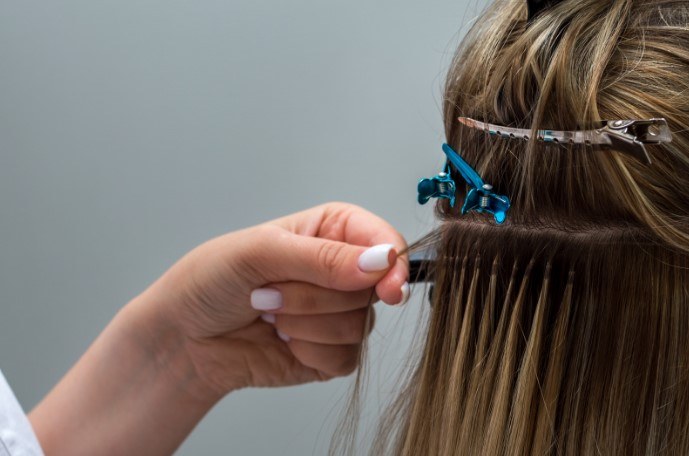
A client with fine, colour-treated hair needs a salon confident in low-tension methods and gentle bond sizing. Ivana Farisei’s approach here uses smaller micro rings spaced closely together, distributing weight across more points rather than fewer, heavier ones — precisely the kind of adaptation a fine-haired client should be looking for when comparing options.
Example Two: Thick, Virgin Hair Wanting Dramatic Length
Thicker, healthier hair generally opens up more options, including keratin fusion for maximum longevity between appointments. A salon that can confidently discuss the trade-off between fusion’s longer lifespan and its heat exposure — rather than defaulting to a single method for every client — is demonstrating the kind of genuine expertise worth paying a premium for.
Example Three: Naturally Curly Hair
Curly-haired clients need a salon that grades hair by curl diameter rather than a generic “curly” label, and that sections hair while curls are in their natural, undisturbed state. This is a genuinely specialist skill that not every luxury-priced salon actually possesses, regardless of how the marketing reads.
Example Four: A Busy Professional Wanting Low-Maintenance Length
Not every client is optimising purely for the most natural possible look — some are optimising for the least ongoing effort. For a busy professional with medium-density hair who doesn’t want to think about aftercare beyond the basics, a salon that can recommend a slightly heavier, longer-lasting method such as keratin fusion, while being upfront about the trade-offs, serves that client better than one that defaults to the most delicate, highest-maintenance option regardless of lifestyle fit. Ivana Farisei’s consultations specifically probe lifestyle factors like this — gym frequency, hair-washing habits, how the hair is typically styled day to day — precisely so the recommendation matches how a client actually lives, not just an idealised routine.
What “Luxury” Should Actually Buy You
It’s worth being explicit about what a luxury price point should deliver, since the word gets used loosely across the industry. Luxury should mean single-donor, ethically sourced hair rather than blended or non-remy alternatives; a technician with genuine, specific training in the method being used rather than general hairdressing experience alone; a full, unhurried consultation rather than a rushed pre-fitting chat; and clear aftercare support, including a follow-up check within the first few weeks. If a salon charges premium prices without delivering on several of these points, the price is buying reputation or location rather than genuine technical quality — worth knowing before you commit.
Common Mistakes to Avoid
- Choosing based on Instagram photos alone. A stunning result on someone else’s hair type doesn’t guarantee the same salon is the right fit for your own density and texture.
- Skipping the consultation stage entirely. Booking straight into a fitting without a proper assessment removes the single best safeguard against a mismatched method.
- Assuming higher price always means better quality. Price should reflect genuine specialism and hair grade, not simply salon branding or a fashionable location.
- Not asking about aftercare support. A salon offering no follow-up check within the first few weeks is offering less genuine support than one that builds this in as standard.
- Ignoring your own hair’s limitations. Insisting on a dramatic method your hair genuinely cannot support safely, rather than trusting an honest technician’s guidance, often ends in early damage.
Troubleshooting: What to Do If You’ve Already Chosen Wrong
If Your Extensions Feel Uncomfortable or Look Uneven
Book a follow-up appointment as soon as possible rather than waiting it out. Many issues, caught early, can be adjusted without needing a full removal and refit — but waiting weeks allows natural hair growth to compound the problem.
If You Suspect the Hair Grade Was Misrepresented
Ask directly for documentation on sourcing and grading. A reputable salon will have this information readily available; reluctance to provide it is a legitimate reason to seek a second opinion, potentially from a specialist provider such as Ivana Farisei, before your next move-up appointment.
If the Method Genuinely Doesn’t Suit Your Hair
Sometimes the honest answer is that a full switch to a different method is needed. This usually means a proper removal period to let natural hair recover before refitting with a more suitable technique — a short-term inconvenience that protects your hair’s long-term health considerably more than persisting with an unsuitable method.
If You’re Not Sure Whether to Switch Salons Entirely
A useful test is to book a second consultation elsewhere, without committing to a fitting, and compare how thoroughly your hair is assessed against your first experience. A noticeably more rigorous process — physical density checks, clear sourcing information, itemised pricing — is a strong signal that the second salon takes hair-type matching more seriously than the first, and that alone is often reason enough to make the switch.
Frequently Asked Questions
How much does a luxury hair extension salon cost in London?
Prices typically range from £450 to £950 for a full head, depending on hair grade, method and length, with luxury providers sitting toward the middle-to-upper end of that range.
What questions should I ask before booking?
Ask how hair is sourced and graded, what the consultation process involves, how pricing breaks down, and what aftercare or follow-up support is included.
Is a more expensive salon always better for my hair type?
Not necessarily — price should reflect genuine specialism relevant to your hair type, not just general reputation or location.
How do I know if a salon actually specialises in my hair type?
Look for explicit language about the specific methods and textures they focus on, ask pointed questions about their approach, and check reviews from clients with a similar hair type to your own.
What if I’m not sure what method suits my hair?

A proper consultation should identify this for you — a good technician will assess density, elasticity and condition before recommending a method, rather than expecting you to arrive with the answer already decided.
Choosing well isn’t about finding the salon everyone else recommends — it’s about finding the one whose specialism actually lines up with what your hair needs. Do that homework once, properly, and the appointment itself becomes the easy part.