Do Elephants Have Hair: The Truth About Elephant Skin and Tusks
6 min read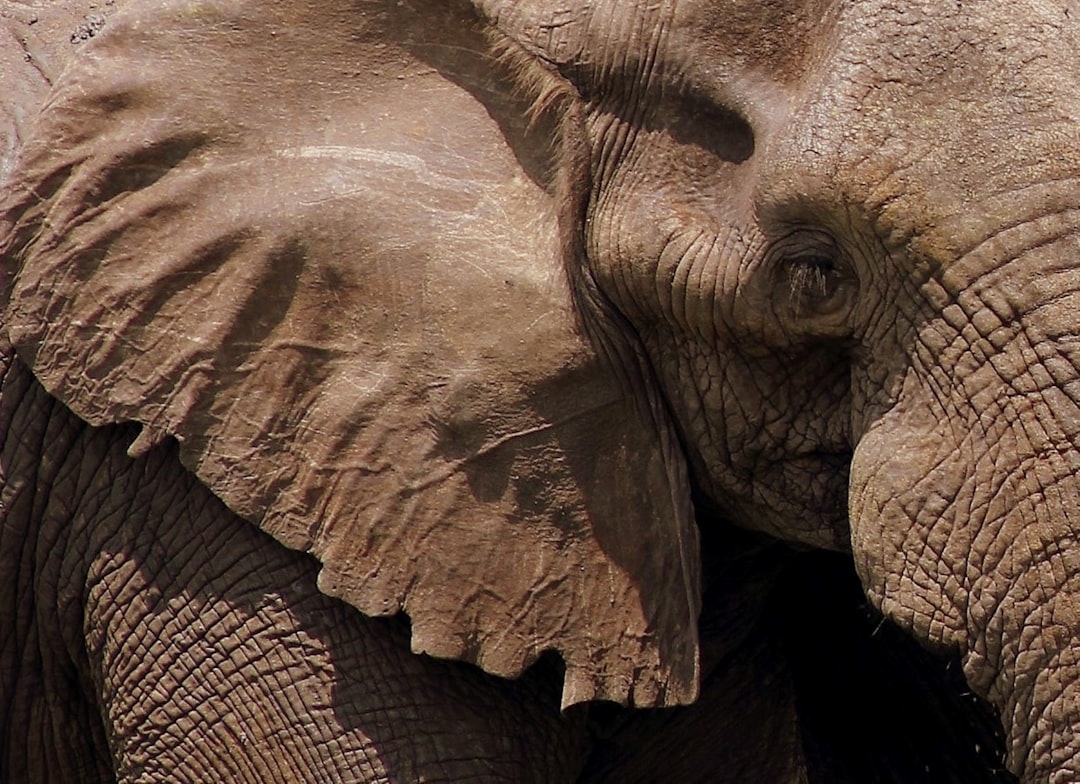
Contents:
- Understanding Elephant Hair: The Biological Facts
- Where Elephants Have Hair: Distribution and Function
- Elephant Skin: More Important Than Hair
- Comparing Elephant Hair Across Species
- African Elephants
- Asian Elephants
- Why This Misconception Exists: A Brief History
- A Visitor’s Experience: The Surprise of Discovery
- Common Mistakes to Avoid When Learning About Elephants
- What the Pros Know: Hair and Identification
- Evolutionary Perspective: Why Elephants Evolved Sparse Hair
- FAQ: Elephant Hair and Biology Questions
- Do baby elephants have more hair than adults?
- Why do elephant tails have a hair tuft if elephants are sparse-haired?
- Can you use elephant hair for anything?
- Do elephants get cold without hair?
- How many hairs does an elephant have compared to humans?
- Understanding Elephant Biology Through Hair
Victorian naturalists in the 1800s debated whether large mammals with thick skin possessed hair—the distinction seemed to matter enormously to their taxonomies. Do elephants have hair? The answer is yes, though not in the abundant manner most people imagine. Elephants do indeed have hair, yet understanding elephant hair requires clearing up widespread misconceptions about these magnificent animals.
Understanding Elephant Hair: The Biological Facts
Elephants possess hair, but sparsely compared to other mammals. An adult African elephant has roughly 1,000-2,000 individual hairs distributed across its massive body—approximately 6 tonnes of skin and tissue. For comparison, a human has roughly 100,000 scalp hairs alone, plus body hair elsewhere. This dramatic difference creates the illusion that elephants are entirely hairless.
Elephant hair is coarse, wiry, and heavily pigmented (typically black or dark brown). Each strand is thick—approximately 1-2mm in diameter—and brittle. These characteristics reflect their evolutionary purpose: protection and sensory function rather than insulation. Elephants generate substantial body heat and live in warm climates, so fur-based insulation would be counterproductive.
Where Elephants Have Hair: Distribution and Function
Elephant hair doesn’t distribute uniformly across the body. Instead, it concentrates in specific locations:
- Head and ears: Sparse hairs across the scalp and behind the ears, roughly 200-400 individual strands
- Tail: A concentrated tuft of 500-1000 hairs forming a brush-like appendage used for swatting insects. This is the most visibly “hairy” part of an elephant
- Body: Scattered individual hairs and whiskers distributed across the trunk, legs, and torso, averaging 10-15 hairs per square centimetre
- Tusks and feet: Essentially hairless; elephant tusks are elongated incisor teeth with no hair, and foot pads are calloused skin
The tail’s hair tuft is particularly important. Elephant hair from tail bristles has historically been used in jewellery, decorative items, and traditional medicines across Asia—a practice that endangered elephants and is now heavily regulated or banned in many countries, including the UK.
Elephant Skin: More Important Than Hair
While elephants have sparse hair, their skin is extraordinary. Elephant skin is remarkably thick—up to 4cm on the back and legs—yet sensitive. Elephants sunburn and suffer in extreme heat despite their bulk. Their skin, not their hair, performs the primary protective function. They regulate temperature through ear flapping (cooling blood circulating through massive ear veins) and mud/dust bathing rather than through fur insulation.
Comparing Elephant Hair Across Species
Two primary elephant species exist: African elephants and Asian elephants. Their hair distribution differs slightly.
African Elephants
African elephants (both savanna and forest subspecies) have slightly more visible body hair than their Asian counterparts, though still sparse. Their tail tuft is more prominently visible. African elephant calves are noticeably hairier than adults—young elephants have denser hair coverage that gradually thins as they mature. This reflects their vulnerability: baby elephants need insulation and protection; adults rely on size and skin thickness.
Asian Elephants
Asian elephants have even sparser hair distribution than African species. Their skin appears smoother and more uniform. However, their head and ear regions contain slightly higher hair density. Asian elephant calves are similarly hairier than adults, but the difference is more subtle than in African elephants.
Why This Misconception Exists: A Brief History
The belief that elephants are hairless stems from casual observation. From a distance, elephants appear hairless because their sparse hair is nearly invisible against their vast body surface. Early European naturalists, working from incomplete specimens and preserved skins, often concluded elephants were essentially hairless.
Scientific examination, particularly microscopic analysis of skin samples, confirmed hair follicles throughout elephant skin. However, the “hairless elephant” misconception persists in popular culture and educational materials, making it one of the most frequent elephant-related questions zoo visitors ask.
A Visitor’s Experience: The Surprise of Discovery
In 2025, a family visited Colchester Zoo in Essex and watched an elephant for nearly two hours. Their five-year-old daughter asked repeatedly: “Does it have any hair?” Her parents were stumped—the elephant appeared entirely hairless from their viewing distance. A zookeeper explained that elephants do have hair, then pointed to the tail tuft and explained the sparse body distribution.
The family left with the surprising realisation that large animals can possess hair while appearing hairless to casual observation. This is a common moment of discovery—elephant hair exists, but requires specific knowledge to notice and understand.
Common Mistakes to Avoid When Learning About Elephants
Mistake 1: Assuming no visible hair means no hair exists. Many animals—whales, dolphins, hippopotamuses—have extremely sparse hair or specialized structures that resemble hair follicles. Absence of obvious hair doesn’t indicate absence of hair biologically.
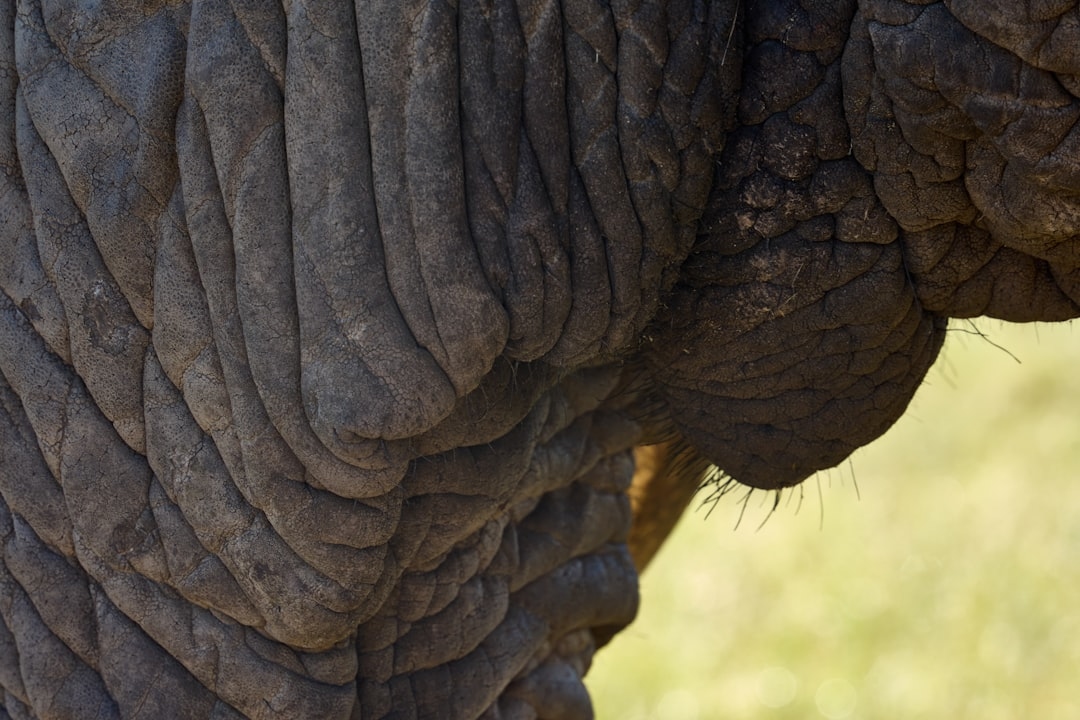
Mistake 2: Confusing elephant skin texture with hair coverage. Elephant skin has deep folds and wrinkles that create visual texture. This skin texture is distinct from hair coverage. The wrinkles protect the skin and help elephants retain moisture.
Mistake 3: Attributing all elephant protection to size. While size is obviously important, elephant skin thickness (up to 4cm) provides substantial protection independently of hair. The skin itself is the primary protective barrier.
What the Pros Know: Hair and Identification
Elephant researchers and zoo professionals use hair characteristics for individual identification. The tail tuft pattern, density, and hair loss patterns are unique to each elephant—similar to human fingerprints. An elephant’s tail becomes more distinctive as it ages, with hair loss and breakage creating an identifiable signature.
This knowledge is practical: researchers in the field can identify specific elephants at distance through binoculars by observing their tail tuft characteristics. Zoo professionals use similar patterns for medical records and behaviour tracking.
Evolutionary Perspective: Why Elephants Evolved Sparse Hair
Elephants’ ancestors possessed thicker hair coverage, as evidenced by woolly mammoth fossils (extinct relatives of modern elephants). As elephants’ ancestors grew larger and migrated toward warmer climates, hair coverage decreased because:
- Large animals generate heat internally more efficiently than smaller ones (surface-area-to-volume ratio principle)
- Thick hair covering prevents heat dissipation, problematic for large warm-climate animals
- Sparse hair reduces parasite load and skin infections in wet, warm environments
- Thick skin provides superior protection and moisture retention compared to hair
This is a textbook example of evolutionary adaptation to environment. Modern elephants represent perfectly optimised biology for their ecological niches—sparse hair is a feature, not a flaw.
FAQ: Elephant Hair and Biology Questions
Do baby elephants have more hair than adults?
Yes, elephant calves are noticeably hairier than adults. Hair density decreases with age. This likely reflects vulnerability in young elephants—additional insulation and protection matter when small. As elephants grow and develop thick skin and size advantages, hair coverage diminishes through shedding and reduced regeneration.
Why do elephant tails have a hair tuft if elephants are sparse-haired?
The tail tuft serves a specialised function: insect swatting. Elephants use their tail tuft to brush away flies, mosquitoes, and other parasites. The concentrated hair allows effective insect control. This tuft doesn’t represent overall hair coverage—it’s a specialised tool.
Can you use elephant hair for anything?
Historically, elephant tail hair was used in bracelets, jewellery, and traditional medicine throughout Asia and Africa. This trade endangered elephants and is now heavily regulated or banned in most countries, including the UK. The Convention on International Trade in Endangered Species (CITES) restricts elephant product trade worldwide.
Do elephants get cold without hair?
No. Elephants live in warm climates and generate substantial body heat. Their thick skin (up to 4cm) provides insulation superior to hair. Elephants in temperate zoos may experience cold stress in winter, but this relates to their evolutionary adaptation to warm environments, not hair deficiency.
How many hairs does an elephant have compared to humans?
An adult elephant has 1,000-2,000 hairs total across its entire body. A human has approximately 100,000 scalp hairs alone, plus facial and body hair totalling 500,000+. Elephants have roughly 1% of human hair density, yet their sparse hair is significantly thicker and coarser.
Understanding Elephant Biology Through Hair
Elephant hair, though sparse and easily overlooked, reveals fascinating evolutionary adaptations. These enormous animals have optimised for warm climates through sparse hair, thick skin, and efficient heat dissipation. The next time you encounter an elephant—whether at a zoo, in a documentary, or in an educational context—look for the tail tuft and sparse body hairs. What initially appears hairless actually represents sophisticated biological engineering refined over millions of years.